


Northwestern Oral & Maxillofacial Surgeons, PC
Traveling and Oral Health: Tooth Tips for the Holidays
We don’t have to tell you: the winter holidays mark one of the busiest seasons of the year. With shopping, parties and vacations jam-packed on the calendar, it’s no wonder that many people take shortcuts when it comes to oral health maintenance during this time. If you are traveling during the holiday season and you want to avoid a January surprise cavity (or worse), here are some simple tooth travel tips to help you keep your smile intact.
 Don’t leave home with a toothache! If you suspect you have any lurking problems in your mouth, schedule an appointment prior to your travel date so that you don’t end up with a tooth emergency while out of town. Research emergency dental clinics in your destination city and have those numbers handy to ensure that your time off is as relaxing as possible.
- No one ever regrets buying travel-sized gear. Keeping a travel toothbrush, floss and toothpaste on hand in addition to trial sizes of your favorite toiletries reduces your packing time, and not just during the holidays.
- Splurge on probiotics! Diseases and germs run rampant in buses, airports and other communal places that you might encounter during your trip. Researchers believe that probiotics are not only good for the gut; they may help maintain optimal oral health too!
- Toothbrushes don’t last forever! Generally, dentists recommend that you buy a new toothbrush every two to three months when at home. However if you are traveling, your toothbrush is exposed to even more bacteria. It’s best to toss it when you return home and swap it for a fresh brush, even if it hasn’t hit the three-month mark yet.
- Chewing gum is a limitless oral-health-on-the-go tip! Bringing sugar-free gum with you has multiple benefits; not only does it taste good and make your breath smell fresh, but the gum can help remove food that may be stuck in your teeth as well, acting as a secondary toothbrush.

Dental Implants: Five Things You May Not Know
How much do you know about dental implants? With the increasing popularity and availability of dental implant surgery worldwide, patients are gaining more and more knowledge about dental implants every day.
 But did you know these five important facts?
- Dental implants are appropriate for almost all ages. Not just for the elderly, dental implants are frequently placed even in the mouths of young adults. As long as the jaw has stopped growing (after puberty; age 16 for girls and age 18 for boys), a dental implant can be placed with great success.
- The titanium post actually fuses (osseointegrates) with the natural jawbone. They grow together to form a stronger foundation for replacement teeth. So dental implants actually improve the bone structure in the jaw, they don’t just fill it in.
- The “dental implant” is actually just the titanium post, one of three parts of the whole process. Other parts used in the full procedure that we think of as “dental implant surgery” are known as the abutment (the connector) and the actual replacement tooth itself (the crown).
- Dental implants preserve jawbone, whereas other teeth replacement options can lead to bone deterioration. Bone is similar to muscle in that it must be used in order to maintain its mass. When a tooth goes missing and the site is left untreated, the jawbone underneath tends to deteriorate. Dental implants eliminate this problem by securing a natural-like tooth right into the jawbone and thus utilizing (and preserving) that area of bone.
- Dental implants protect their neighbors. By contrast, a traditional, tooth-supported bridge involves the grinding away of the teeth on either side to act as a hammock for the bridge. With dental implants, the jaw is the anchor and support for the artificial tooth.
The bottom line? Dental implants offer a safe and manageable alternative to traditional tooth replacement methods.
Wisdom Teeth: What do I Really Need to Know?
For the majority of people, the removal of their wisdom teeth is just another part of growing up. However, that doesn’t mean it’s an easy part! A combination of frightening stories from friends and false rumors online have may have you feeling anxious about your upcoming procedure. So we’d like to set the record straight and put your mind at ease.
 Here is what you really need to know about wisdom teeth:
- If you ignore them, there will be more (pain, that is).
Despite their name, it is not a smart idea to refuse surgery and live with your wisdom teeth. Most wisdom teeth are asymmetrical (they don’t grow evenly) which can cause complications. Asymmetric wisdom teeth have a high chance of developing gum disease and infections, which can become life threatening if not treated.
- Patience is not a virtue.
As wisdom teeth generally form roots during the teenage years, it is better to have them removed during that time. Waiting until you are 30 or 40 can increase the chance of them rupturing a nerve, leading to a longer and more complicated recovery.
- I scream for ice cream!
We recommend that you only ingest liquids for a day after the procedure. Ice cream, pudding and smoothies are all great choices (without straws). Softer foods are advised for the rest of the week, so make sure to stock up on pasta, eggs and mashed potatoes! And remember: NO straws during your recovery period.
- No pain, plenty to gain.
Thanks to anesthesia and/or laughing gas, your wisdom tooth extraction will be painless. However, most of our patients do experience some sort of discomfort in the days following the surgery, so we will suggest methods and medications to help with that while you are in our office.
- Rest is the best!
Post-removal recovery depends on the patient, but most people do not resume work for four-to-five days. Patients are also advised to not exercise vigorously or play any sort of wind instrument for a week.
Teeth Nerve Stem Cells Signal New Age of Recovery
Have you ever thought about the possibility of growing new teeth? Of course, when we are younger, this phenomenon does occur, with adult teeth replacing our missing baby teeth. Many scientists and doctors, however, believed it was impossible, or highly unlikely for adults to ever form new teeth.
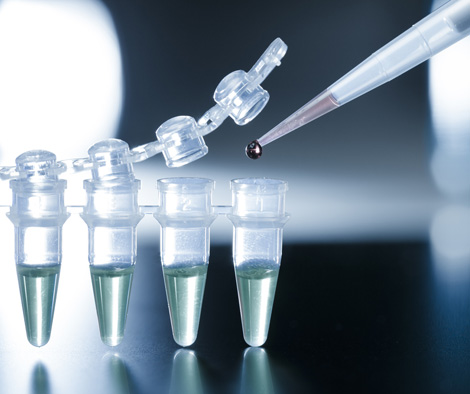 Yet only recently, researchers in Sweden have discovered that such a feat may one day become commonplace. While most scientists did know that the pulp in teeth contains a certain amount of stem cells, the Swedish researchers of the Karolinska Institute have discovered the origin of these cells.
These stem cells are typically used to help reform damaged teeth by assisting with the restoration of tooth tissue. Upon further examination, however, the researchers have discovered that these stem cells originally were nerve cells of the tooth. These cells leave the nerves at early stages of development, changing their identity to become part of the connective tissue, which forms dentin underneath the enamel.
The future possibilities for this discovery are almost endless. Using these nerve tissues, it may be possible for scientists to manipulate the stem cells to form new adult teeth. As these teeth will essentially be copies of one’s original teeth, this innovative process may replace veneers and other restorative processes as the best form of teeth restoration.
In fact, the benefits of this discovery may not stop with just teeth. Igor Adameyko, from Sweden’s Department of Physiology and Pharmacology, believes that all types of peripheral nerves, not just the ones found in teeth, “may function as important stem cell reserves.” Adameyko hypothesized that these “multipotent stem cells can depart from the nerves and contribute to the healing and reformation of tissues in different parts of the body.”
To summarize this exciting research, tooth nerve cells may be the key to a new wave of human recovery and restoration, and adult tooth creation is only one of these recently discovered benefits!
Dental Implants: Are they right for you?
Not everyone is blessed with perfect teeth. Many people would tell you they lack the smile they’ve always wanted due to genetics, disease, and sometimes even accidents. Fortunately, we have a solution. With dental implants, you will no longer feel self-conscious about your smile; but rather delight in having a new and improved grin!
 What are dental implants?
Technically, dental implants are replacement roots for missing teeth. First, the implant, a titanium screw, is inserted into the jawbone. Next, a removable or permanent replacement tooth is attached to the top of the implant to mirror the appearance of your natural teeth. Currently, over 3 million people worldwide have dental implants and the technology has reached a point where each procedure has a 98% success rate.
Why should I get dental implants?
Beyond simply improving the appearance of your smile, dental implants include many other benefits:
- Oral health: Unlike other restorative procedures, dental implants do not necessitate the reduction or alteration of neighboring teeth, thus resulting in improved oral health overall. Additionally, dental implants do not interfere with access to neighboring teeth, so it is no harder to brush or floss.
- Longevity: While other dental aides such as dentures and bridges inevitably require replacement, dental implants are extremely durable, lasting many more years and in some cases even a lifetime!
- Convenience: Dental implants do not ever need to be removed for activities such as eating, drinking and brushing, and do not require adhesives. They act, look and feel just like natural teeth!
How much do dental implants cost?
Dental insurance does not always cover the cost of dental implants. However, in the long run, dental implants are usually cheaper than other restorative procedures. Because they do not need to be replaced, the initial investment for implants is well worth the price.
Dental implants are becoming a popular trend in the world! Call us to set up an appointment to upgrade your smile!
Considering an Upgrade to Dental Implants
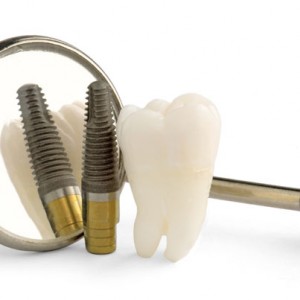 Have you been thinking of upgrading your current tooth replacement strategy but aren’t sure where to start? This is a great time of growth in modern dentistry, especially when it comes to replacing missing teeth! With the evolution of dental implants, patients don’t have to suffer some of the pains of the past when older, traditional tooth replacement methods were used.
Traditionally, missing teeth were always “fixed” with bridges or dentures. And while both of those procedures are still in use by dentists and do still serve an important purpose, they often cause unintended problems in the mouth that modern dental implants may be able to alleviate, or avoid completely.
What is a dental implant, you may be asking? At the most basic level, a dental implant is simply a prosthetic tooth that is mounted to a metal post which is screwed into the jaw bone. The procedure is typically done in two visits. During the first procedure, a titanium screw is inserted into the jawbone, where it is allowed to “settle in” and bond, a process that takes about six to eight months. After that, the dentist creates a prosthetic tooth and attaches it to the titanium post for a fully functional (yet fake) tooth!
The benefit of dental implants is that, unlike dentures, they are almost unnoticeable by the patient. Anyone who has had dentures knows that they tend to slip and wear down and sometimes even cause mild pain or discomfort. With dental implants, you will not even know they are there. They function just like a natural tooth in your mouth, no slipping, movement or separate cleaning required. Similarly, patients who are used to receiving bridges may benefit by an upgrade to an implant as bridges have a tendency to invite bacteria and infection, requiring additional replacements.
Whatever your concerns about dental implants are, we are here to help. Give us a call today to see if dental implants might be right for you!
Will Wisdom Teeth Someday Become Obsolete
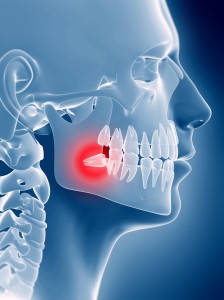 Most people are familiar with third molars, more commonly known as “wisdom teeth”. It is usually suggested that a young adult entering the “age of wisdom” have any existing wisdom teeth removed prior to developing any problems. Because most people’s mouth do not have room for these third sets of molars, the remaining wisdom teeth often fail to erupt and can cause pain, infection or inflammation.
However, you might not realize that about 35 percent of the population doesn’t experience any third molar development. This percentage is slowly growing, begging the question of whether we are on an evolutionary track of losing them completely.
Scientists still aren’t sure of the role that DNA plays in third molar development. One large difference in third molars is that they are the only teeth to develop entirely after birth, which makes it harder for nature to select against them. There may also be environmental factors at work. Studies show that certain cultures have fewer incidences of third molars, but scientific evidence of influencing factors is still to be determined.
As science progresses, many believe bioengineering could be used to prevent the development of third molars altogether. For wisdom teeth to form, a special tissue that promotes the bone growth has to migrate back into the mouth to interact with jaw tissue. Some scientists have begun work on administering a laser or chemical agent that would prevent this process.
It is hard to say what the future might hold for wisdom teeth. For now, we continue to recommend removing your wisdom teeth to avoid the pain and periodontal disease that results from impaction of wisdom teeth. Moreover, this surgery should take place during the young adult years prior to the teeth attaching to the jaw and becoming more difficult to extract.
Wisdom tooth removal in our office is a relatively simple process. Call us to reserve a consultation today.
The Evolution of Dental Care
 Did you know that the toothbrush is one of the oldest tools that humans still use? In fact, in a survey conducted in 2003, Americans chose the toothbrush as the number one invention over the car, personal computer, cell phone, and microwave. This may come as a shock in a day and age obsessed with technology, but it just goes to show how much value we place on our pearly whites. But it makes you wonder… how have people kept their teeth clean throughout the centuries? How did the toothbrush, toothpaste, and floss come into existence and how have they evolved over time?
One would assume that the first toothbrush was surely the finger, but evidence has shown that as far back at 3500 BC to 3000 BC chewing sticks were used in Babylonia. These chewing sticks were essentially a stick from an astringent tree with a frayed end that acted as bristles to clean teeth. These chewing sticks have also been found in ancient Egyptian tombs. Their predecessors are still commonly used in certain areas of the Middle East, Africa, Asia, and South America and are known as miswak or mswaki sticks.
When excavating Ur in Mesopotamia, ornately decorated toothpicks were found that dated back to 3000 BC. Other archaeological digs have recovered various tree twigs, bird feathers, animal bones, and porcupine quills as the earliest toothbrushes and toothpicks. An ancient Sanskrit text on surgery dating back to the 6th century describes severe periodontal disease and stresses oral hygiene; “the stick for brushing the teeth should be either an astringent or pungent bitter. One of its ends should be chewed in the form of a brush. It should be used twice a day, taking care that the gums not be injured.” Pretty sound advice, even by current standards! Ancient Greek and Roman literature referenced the use of toothpicks to keep their mouths clean, and ancient Roman aristocrats kept special slaves for the sole purpose of cleaning their teeth. Imagine that job!
Ancient Chinese writings from around 1600 BC portray chewing sticks that were derived from aromatic trees and sharpened at one end to act as a toothpick. In the thirteenth century, the Chinese began to attach boar bristles to bamboo, essentially fashioning the first toothbrush. The optimal choice for bristles was taken from the back of the necks of cold climate boars, generally found in Siberia. Traders introduced these toothbrushes to the West and they quickly gained popularity. At that time Europeans were brushing their teeth by dipping a linen cloth or sponge in sulfur oils and salt solutions to rub away tooth grime. This was referred to as “The Greek Way”, as Aristotle had recommended this method to Alexander the Great. As these toothbrushes spread from East to West, in the West they preferred softer horse hairs over the coarse boar bristles, yet horses were deemed too valuable for the sake of toothbrushes, making boar bristles popular well into the early 1900’s.
Fast-forward to 1780 and we meet a man named William Addis of Clerkenwald, England. Addis was sitting in Newgate Prison for allegedly inciting a riot. The method for brushing teeth in jail was to take a rag and dip it in a solution of soot and salt and rub it onto the teeth. Addis believed there had to be a more efficient way, so while he passed his time in jail he began to think up solutions. Spying a broom, inspiration struck him and he took a small animal bone leftover from his meal and drilled holes into it. He then tied some swine fibers into bunches, strung them through the holes, and glued them into place. At this time in Georgian England, refined sugar was being shipped in from the West Indies in mass quantities. This caused a huge increase in the consumption of sugar for Londoners who then suffered from rotting teeth, the only treatment for which was to pull the infected teeth. When Addis was released from jail, he went on to market and sell his toothbrush under the name Wisdom Toothbrushes, which went on to become a very successful business that is still around today.
Toothbrushes continued to be made with animal bone handles and more often than not, boar bristles, although fancy toothbrushes were made with badger hair for those who could afford them. Celluloid handles were introduced in the 1900’s and quickly replaced bone handles. In the 1920’s a new method of attaching bristles to the handle was developed: holes were drilled into the brush head, bunches of bristles were then forced through the holes, and secured with a staple. This method is the same method that is commonly used today.
The next evolution in toothbrushes occurred when Wallace H. Carothers of Du Pont Laboratories invented nylon in 1937. Nylon bristles quickly overtook animal hair bristles for sanitation and cost-effective purposes. Although boar hair bristles often fall out, do not dry well, and are prone to bacterial growth, they strangely still account for 10% of the toothbrushes sold worldwide. The new nylon bristled toothbrushes were sold as “Doctor West’s Miracle-Tuft Toothbrush” due to its more hygienic properties.
With World War II looming in the background, British and American housewives were instructed to waste nothing, which translated to no more bone handles for toothbrushes. Bone handles had long been popular for things like toothbrushes, knives, guns, and handles for many more items. The shift to celluloid was a natural progression as soup bones were needed more than ornate bone handles. World War II gave oral hygiene an unexpected boost. The soldiers in World War II were expected to brush twice daily, a habit they brought home with them, likely due to the fact that Trench Mouth had become so rampant during World War I.
And what about toothpaste? Well, ancient Egyptians were making a “tooth powder” as far back as 5000 B.C.E. It was made from ox hooves, myrrh, eggshell fragments, and pumice. No device was found with the remnants of the tooth powder, which is why it is assumed that the finger was the first actual toothbrush. Other early tooth powders contained mixtures of powdered salt, pepper, mint leaves, and iris flowers. In Roman times, urine was used as a base for toothpaste. And since urine contains ammonia it was likely an effective whitening agent. In later times, homemade tooth powder was made of chalk, pulverized brick and salt. It is said that Napoleon Bonaparte regularly brushed his teeth with an opium-based toothpaste. In 1873, Colgate mass-produced the first toothpaste in a jar called Crème Dentifrice. By 1896, Colgate Dental Cream was packaged in collapsible tubes. Finally, by 1900, a paste of hydrogen peroxide and baking soda was developed, and by 1914 fluoride was introduced and added to the majority of toothpastes on the market at that time.
And what of floss? Researchers have found floss and toothpick grooves in the teeth of prehistoric humans. But it wasn’t until 1815 when a New Orleans dentist named Levi Spear Parmly promoted flossing with a piece of silk thread that floss really gained notoriety. Levi went on to be credited for inventing the first form of dental floss. By 1882 the Codman and Shurtleft Company of Randolph, Massachusetts began mass-producing unwaxed silk floss for commercial use. In 1898 Johnson & Johnson received the first patent for dental floss. Dr. Charles C. Bass then developed nylon floss, which performed better than silk because of its elasticity. Today floss is still made of nylon.
Who would’ve thought that the history of dental care would be so fascinating? And who would’ve guessed that the toothbrush we use today evolved from a stick and was perfected by a convict? Today, there are over 3,000 patents worldwide for toothbrushes. Regardless of how they got here, toothbrushes, toothpaste, and floss are a necessity in our daily lives.
Healthy Foods After Oral Surgery
O n our website and social media channels, we have thoroughly explained why and how oral surgery is beneficial. Here’s a reason that has gone unmentioned: it will make you appreciate the solid foods and acidic drinks that you aren’t able to eat or drink immediately after your procedure. Sandwiches, chips, and orange juice should all be avoided after your wisdom tooth removal, dental implant surgery, orthagnathic surgery etc. Too much chewing can possibly re-open the sensitive areas of your mouth, and can cause bleeding or even infection. But don’t worry – we have a few healthy food and beverage recommendations when your mouth is delicate.
First 24 Hours
For the first 24 hours after your surgery, your teeth/jaw will need some time off. Therefore, smoothies, low-fat jello/puddings, and cold soups will be the most beneficial for your healing process. It is extremely important to refrain from using a straw, as the sucking causes excess strain, which ultimately can delay the healing process. Here are a few recommendations:
Banana Mango Shake- A healthy, filling way to start the day after your surgery. Also, bananas help replace electrolytes and maintain fluid balance within your body.
Applesauce- You can’t eat apples, but this is the next best thing!
Tomato Soup- A great snack even when your mouth isn’t sensitive.
Cold Pasta- Ever tried a Sun-Dried Tomato Basil Orzo? Might be the perfect time to expand your taste buds!
Next Few Weeks
Over the next few weeks, you will start easing into enjoying solid foods again. Here are some tasty transitional foods (some can even help the healing process!)
Broccoli Omelet: Who would’ve thought thathealing from oral surgery could be so healthy? Broccoli contains enough calcium to speed up the healing process, and the eggs provide enough protein to make this a fully substantial meal while taking it easy on your teeth/jaw.
Chicken Salad: Finally some real meat! Chicken that is chopped up into small pieces can be eaten with a salad, or even a cold pasta. The chicken provides the protein, while the salad (with soft vegetables) provides the healthy goodness.
Chicken Pesto Pasta: Believe it or not, this dish can prevent oral infection. The basil in pesto contains volatile oils, which can protect the mouth from oral bacteria. The last thing your mouth needs after oral surgery is oral bacteria.
We hope that these recommendations help! We genuinely want you to heal as quickly as possibly while maintaining a healthy lifestyle. Feel free to call us with any questions about the post oral surgery process.
Can My Dental Implants Get Cavities
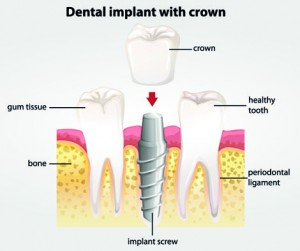 In my practice, I hear dozens of questions every day about dental implants from concerned (or simply curious) patients. Every one of those questions is a good question and I always try to provide an equally good answer. To help you better understand an upcoming dental implant procedure, we’ve compiled a top-five list of the most common questions about dental implants that we field in our office every day:
1. Can dental implants get cavities?
No. Because the implant-restored crown is an artificial (not natural) material, it cannot grow cavities, phew! However, you still need to have regular gum care and cleanings around the implant site just like you would for a natural tooth.
2. Can implants slip or fall out like dentures?
No. The artificial tooth (crown) is attached to the permanent titanium post that is set in the jaw. They will not slip around or fall out like you may have experienced with dentures.
3. Can I sleep with my dental implants in?
Yes! They are practically “permanent”, unlike dentures. You do not need to remove and soak them overnight.
4. Aren’t dental implants more expensive than bridges and dentures?
It depends. If you are talking about just a few teeth, implants may be cheaper over time than bridges because they last longer. However, if you need a whole row of teeth replaced, dentures may be a less expensive option for you. Each case is unique, however, so be sure to call us for a proper consultation. We are here to help you understand your costs and benefits so that you can make an informed decision.
5. How long will my dental implants last?
If implanted and cared for properly, dental implants can last for many decades or possibly even a lifetime. Some implants have been in patients for over forty years!
Don’t see your question on our list? Contact us today for quick answers!