


Northwestern Oral & Maxillofacial Surgeons, PC
The 6 Tips Your Toothbrush Wants to Tell You
You already know how important I am to your oral health. That’s why you brush your teeth for two minutes twice a day.
However, are you aware of how much bacteria lives on your toothbrush? Researchers have found that a single toothbrush can have as many as 10 million germs and bacteria! But, don’t let this statistic scare you away from brushing. These bacteria aren’t a huge threat to your teeth according to Everydayhealth.com, because its been researched that these germs don’t make people sick.
That’s because toothpaste is made with an anti-germ component.
So what is your toothbrush trying to tell you to help prevent all these germs?
1. Keep me clean and dry!
It’s important that you use your toothbrush correctly. Always make sure to rinse it in tap water and give it time to air dry. Germs need moisture to survive, so as long as you give your brush enough time to dry before using it, you should be fine. Make sure not to leave any toothpaste or debris in the head of your brush, rinse it well!
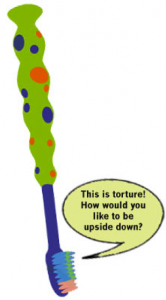 2. Store me upright!
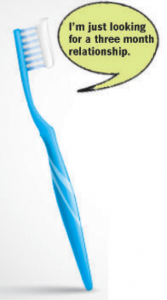 When you’re at home, store your toothbrush upright in a cup or toothbrush holder. This allows it to air dry, which will help kill those germs.
3. On the road? When traveling make sure to keep your toothbrush in a travel holder, that way it isn’t rolling around uncovered and collecting bacteria in your bag. .If you really want to be in the clear you can soak your toothbrush in a toothbrush sanitizer or in mouth wash. Another alternative to kill germs is dipping your toothbrush in boiling water for 5-10 seconds.
4. Don’t ever attempt to microwave or dishwasher your toothbrush, these appliances will damage your toothbrush!
5 . Don’t brush where you flush!
Try to store your toothbrush as far away as possible from the toilet. This is because each toilet flush sends a spray of bacteria into the air and I’m sure you don’t want that near your open toothbrush! We recommend at least 3 feet!
6.I only want one owner!
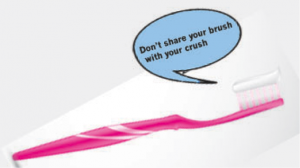 Don’t share! Forget what your kindergarden teacher told you about sharing. When it comes to toothbrushes, it’s an absolute no! No matter how close you may be to that person, whether it’s your sibling or spouse, don’t ever use their toothbrush.
Calming Your Nerves Before Dental Procedures
 Almost everyone has some feelings of nervousness when thinking about visiting the dentist. We hear it all the time from our patients. But don’t worry (I know, easier said than done). It is totally normal to have a bit of anxiety (or even a lot of anxiety) before you come to our office.
In our office, we have many years of experience in dealing with nervous patients. So to help you out, we’ve compiled this quick yet effective set of tips for dealing with those inevitable nerves before your dental procedure.
- Let us know! Sometimes just saying the words, “I’m a little bit nervous” can help by normalizing the nervousness itself a little bit, which instantly releases some of that stress that has the tendency to build up in your system. It also alerts us, which is great! In fact, we might just be able to help by doing procedures a little bit differently than we normally would or even just by offering some words of encouragement and reassurance.
- Music – Ask us to turn up (or down) the music in your exam room if that helps. Or, depending on the procedure, you may even be able to listen to your own MP3 player while we work away. Ask us ahead of time to be sure the procedure will allow for this.
- Breathe – Did you know that consciously taking a breath instantly calls to action your parasympathetic nervous system which is the part of the brain responsible for calming you down? The good news is that you always have your breath with you, so don’t forget to use it! Just by paying attention to your breath, for example, how it feels coming in and going out and the other sensations it creates, you can access the calming center of your brain. An easy breathing exercise that can be used anytime, anywhere, including in the dental chair is to breathe in for 4 counts, then out for 4 counts. You will instantly feel better.
We hope you find these tips helpful in dealing with your dental fears. Just remember, you are not alone.
Soft & Healthy Foods After Dental Implant Surgery
 On our website and social media channels, we have thoroughly explained why and how oral surgery is beneficial. Here’s a reason that has gone unmentioned: it will make you appreciate the solid foods and acidic drinks that you aren’t able to eat or drink immediately after your procedure. Sandwiches, chips, and orange juice should all be avoided after your wisdom tooth removal, dental implant surgery and orthognathic surgery. Too much chewing can possibly re-open the sensitive areas of your mouth, and can cause bleeding or even infection. But don’t worry – we have a few healthy food and beverage recommendations for when your mouth is delicate.
First 24 Hours
For the first 24 hours after your surgery, your teeth/jaw will need some time off. Therefore, smoothies, low-fat jello/puddings, and cold soups will be the most beneficial for your healing process. It is extremely important to refrain from using a straw, as the sucking causes excess strain, which ultimately can delay the healing process. Here are a few recommendations:
Banana Mango Shake- A healthy, filling way to start the day after your surgery. Also, bananas help replace electrolytes and maintain fluid balance within your body.
Applesauce- You can’t eat apples, but this is the next best thing!
Tomato Soup- A great snack even when your mouth isn’t sensitive.
Cold Pasta- Ever tried a Sun-Dried Tomato Basil Orzo? Might be the perfect time to expand your taste buds!
Next Few Weeks
Over the next few weeks, you will start easing into enjoying solid foods again. Here are some tasty transitional foods (some can even help the healing process!)
Broccoli Omelet: Who would’ve thought that healing from oral surgery could be so healthy? Broccoli contains enough calcium to speed up the healing process, and the eggs provide enough protein to make this a fully substantial meal while taking it easy on your teeth/jaw.
Chicken Salad: Finally some real meat! Chicken that is chopped up into small pieces can be eaten with a salad, or even a cold pasta. The chicken provides the protein, while the salad (with soft vegetables) provides the healthy goodness.
Chicken Pesto Pasta: Believe it or not, this dish can prevent oral infection. The basil in pesto contains volatile oils, which can protect the mouth from oral bacteria. The last thing your mouth needs after oral surgery is oral bacteria.
We hope that these recommendations help! We genuinely want you to heal as quickly as possibly while maintaining a healthy lifestyle. Feel free to call us with any questions about the post oral surgery process.
5 Points for Wearing a Mouth Guard During Sports

It’s easy for people to not realize what they have until it’s gone. Imagine what it would be like if you were missing one of your front teeth? You’d probably be a bit embarrassed smiling and talking, and eating would feel pretty abnormal as well. The good news is that taking preventative measures to protect your smile can diminish the chances of you having a toothless smile.
Wearing a mouth guard when playing sports decreases the risk of injuries to the mouth or jaw. Some sports players don’t like to wear mouth guards because of the inconvenience of their appearance while wearing one, but more injuries can happen when not wearing a mouth guard that can affect your appearance in a much more inconvenient way. Here are five reasons why you should always protect your pearly whites when participating in any contact sports or collision sports where unexpected contact can happen:
1. Protection Against Tooth Fractures
Mouth guards protect your teeth from chipping and breaking. Even though tooth fractures can usually be saved, why go through the risk when wearing a mouth guard can save you all the trouble.
2. Protection Against Tooth Replacement
Wearing a mouth guard is a cushion for your teeth, so if a ball hits your face your teeth don’t receive a crushing force. However, if a ball hits your mouth without a mouth guard, it can result in completely breaking or ruining your tooth, leaving you with a toothless smile and an emergency call to our office. Having a gap in your smile due to an accident that could have been prevented isn’t worth it.
3. Protection Against Soft Tissue Injuries
Some contact sports involve quick impacts that could leave you biting through your tongue or lips! A mouth guard can prevent soft tissue injuries by creating a soft resistance from teeth contacting your lips and tongue.
4. Protection Against Concussions
According to the American Dental Association, mouth guards could help reduce the severity and incidence of concussions. A properly fitted mouth guard decreases the likelihood of sustaining concussive injury because the padding between the mandible and the maxilla can lessen the force of the mandible pushing up on the skull near the brain, which causes a concussion.
5. Protection Against Jaw Fractures
Wearing a protective mouth guard protects you from jaw fractures. Impact to the neck or jaw could result in serious injury, but with the protection of a mouth guard during an impact, it reduces the likelihood of jaw dislodgment or neck trauma.
The Academy of General Dentistry estimates that mouth guards prevent more than 200,000 injuries each year! Using a mouth guard won’t only help prevent you from dental and jaw injuries but can also prevent damage to braces or other orthodontic work. If you’re ready to take the step to save your smile when playing sports, contact us for more information about mouth guard protection.
FAQs Regarding Dry Socket
 Many of us have had a tooth pulled before by our dentist or oral surgeon; whether it was a tooth that couldn’t be saved or your wisdom teeth. While getting a tooth pulled isn’t the most enjoyable experience, it’s important to understand the risks that could evolve during the recovery. When pain becomes intense and isn’t relieved a few days after surgery, there’s the possibility that it could be a symptom of dry socket.
Dry Socket, also known as Alveolar Osteitis, is the inflammation of the alveolar bone and usually occurs where the blood clot fails to form or gets lost in the socket. While the percentage of those who develop dry socket is rare—about 2%-5% of people—it’s rather important to know why it happens and to determine if you may be more prone to it.
Someone who doesn’t have dry socket would see a dark blood clot near the area where the tooth was pulled. An area that might have dry socket wouldn’t be dark, but rather just whitish bone.
Some of the most common symptoms for Dry Socket are:
-Aching and throbbing pain in the area of the socket
-Pain near the ear, eye, temple and neck
-Bad Breath
-Bad Taste in the mouth
You’re more likely to get dry socket if the one of the following applies to you:
-Smokers
-Have a pre-existing infection in the mouth
-Practicing poor oral hygiene
-Those who have gotten Wisdom Teeth pulled
-If you have a greater-than-usual trauma during the extraction surgery
-If you use Birth Control pills
-Have a history of dry socket after having teeth pulled
After learning the harmful symptoms of dry socket, it is no surprise that you may want to take any precautions to avoid it. Dr. Olsson suggests the following post-operative instructions:
-Take recommended medications
-Avoid hot fluids for 1-2 days after oral surgery
-Drink cold fluids, as they facilitate with formation and prevent disintegration of the socket
-Avoid smoking!
-Do not drink through a straw, the pressure leads to an increased chance of clot instability.
While dry socket can be painfully unpleasant, it is easily treatable. Treatment usually includes a combination of cleaning and packing the infected area. Some patients may also need antibiotics for the socket as a preventative measure. The pain should then decrease about 4-5 days after and is typically healed in less than two weeks. If you believe you have developed dry socket from your tooth extraction, contact our office for specific treatment details.
Implant Supported Dentures
 Most patients see dental implants as a procedure that is perfect for replacing one or two teeth. They don’t, however, conclude that a dental implant surgery is the solution for missing an entire row of teeth. In this instance, most people are still reverting to the outdated methods of receiving dentures. But there is actually an efficient way to obtain a mouth full of secure teeth through the dental implant process. This new technique is called “implant supported dentures,” which gives patients new reasons to smile.
A Team of 4 is Stronger Than 15 Individuals
I know what you’re probably thinking. “Wouldn’t it be a long, grueling process to take in 15 or so dental implants in the same surgery?” That is hard to argue with. A mouth with 20 dental implants drilled into it seems like too many metal rods for one person to own. They probably wouldn’t be allowed on airplanes. This is why oral surgeons now have a procedure where they use 4 titanium implants to connect an entire row of teeth. Picture it as 4 pillars with metal bridges connecting them. On the metal bridges is where the fully customized row of teeth will be placed.
Too Real to be Called Artificial
The word “artificial” is misleading when describing the new set of teeth. These teeth are now permanent, and will be treated the same as natural teeth. They need to be well maintained as regular teeth do, and cannot be taken out. It is impossible to distinguish implant-supported dentures from natural teeth. Even oral surgeons would have trouble picking apart the differences. Most patients are concerned with not being able to enjoy food like they used to. These new rows of teeth know when they encounter hot and cold food, and can still bite through the roughest of surfaces. Ultimately, “new and improved” is an acceptable replacement for “artificial” when describing implant supported dentures.
The Time is Now
Oral surgeons who are trained at this process are able to have the patient’s teeth completed in roughly 2.5 hours. This surgery leads to lifelong fulfillment of having a lively smile, so this may be the most productive 2.5 hours ever spent. When the entirety of one’s mouth looks like it’s ready for a makeover, implant supported dentures are the key to rebuilding.
3 Reasons to Have Corrective Jaw Surgery
 Jaw Surgery might sound intimidating, frightening, or both. It isn’t easy to process the fact that your jaw needs to be realigned. Ultimately, overcoming the surgical aspects of orthognathic surgery is well worth the years of having a symmetric, visually appealing jawline. Here are the top reasons why more and more patients are considering jaw surgery:
1: Improvement in Chewing and Biting Foods: Have you ever been unable to enjoy food due to a physical complication? Those who have had their wisdom teeth out can admit to this, as well as those who have once had severe cuts on the insides of their mouths. However, there are food lovers out there who regularly cannot enjoy the full satisfaction of eating food due to their jaw’s misalignment. A world where one has to proceed with caution before chowing down lunch is a world that needs to be fixed – with jaw surgery.
2: Reduce of Chronic Headaches: Oral Surgeons notice that when patients have TMJ disorder, they have tendencies to grind their teeth at night. Most of these teeth-grinders do so unconsciously, which results in morning headaches. Most people with chronic headaches simply take their pain relievers and move on without receiving any significant treatment. Corrective jaw surgery will cease the teeth-grinding, which will ultimately reduce daily headaches.
3: Improving Overall Facial Appearance: Having and underbite or an overbite is certainly unfortunate, but fixable. Even if one’s bite needs to be fixed by a millimeter; this millimeter can go a long way. If one’s mandible projects outward, he/she has an underbite. This gives the appearance of an oversized jaw, which can harm the beauty of his/her smile. By contrast, an overbite makes one look as if their jaw isn’t fully developed. The jaw bone is surgically moved forward or backwards accordingly.
The process of getting Jaw Surgery is seemingly a long one, but well worth it in the end. Patients who have had jaw surgery are thrilled about their new and improved smile and overall confidence. Improving appearance, preventing headaches, and being able to thoroughly enjoy food are three worthy reasons to consider an orthognathic treatment.
Jillian Michaels Protects Her Winning Smile With a Mouthguard
 Although she’s an enthusiastic aficionado of the martial arts, Jillian Michaels — fitness guru, television personality and popular author — hasn’t had a dental accident in years. That’s because, these days, she always wears a mouthguard when she’s participating in a potentially dangerous activity. But she wasn’t always so lucky: a childhood accident at the swimming pool made it necessary for her to have her two front teeth replaced with crowns.
We certainly recommend a custom-fitted mouthguard as your first line of defense! But if an accident does happen, crowns are a good option for tooth restoration. What exactly is a crown? Sometimes called a cap, it’s simply a custom-made replacement for the visible part of a tooth that has been damaged. Crowns can be made of tooth-colored porcelain or dental ceramics, metal alloys, or porcelain fused to metal.
If the roots of the affected tooth are healthy, crowns can be an excellent restoration option; if damaged, a dental implant may be required.
Most dental implants consist of two parts: a screw-shaped post made of titanium metal, which sits under the gum line, and a lifelike crown, custom-fabricated to match your own teeth. The post, which is implanted in a minor surgical procedure, will actually fuse with the underlying bone in your jaw. This occurs during a healing period of a few months, after which the crown is attached. The success rate for this procedure is over 95% — the highest of any tooth-replacement option!
Either way, we can evaluate your individual situation and recommend the most effective restoration option. Contact Dr. Olsson today to schedule a consultation!
Our New Blog!
Our blog has recently been set up. Please check back soon!